
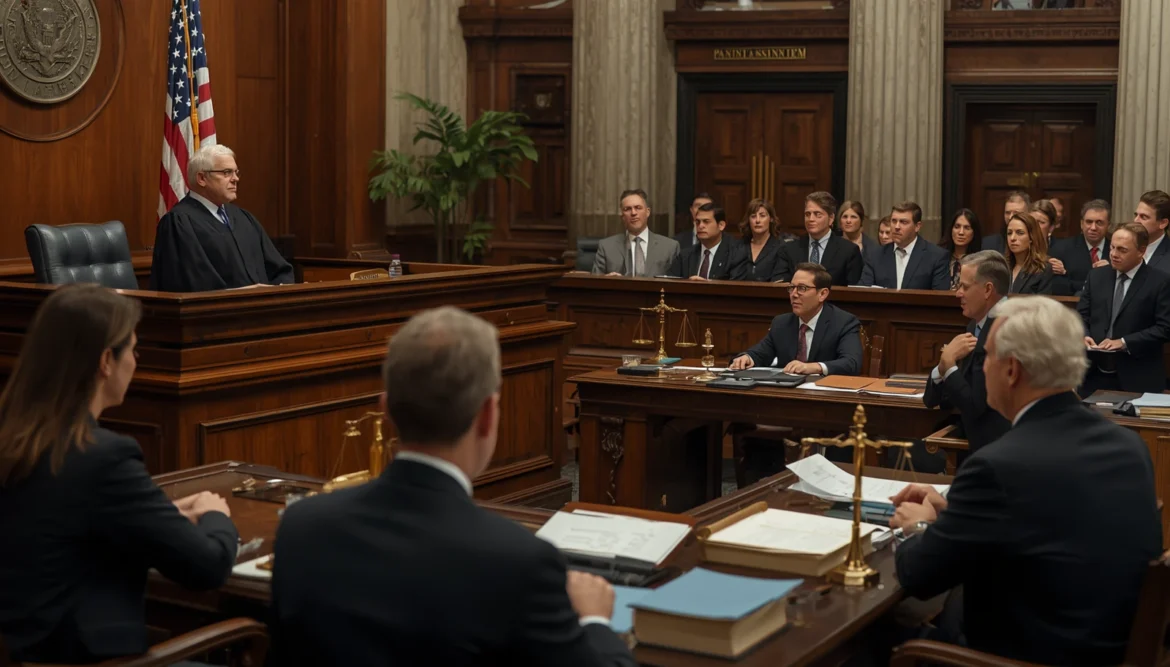
Some criminal cases disappear from public attention within days. Others refuse to fade because every new detail raises another question. This is one of those stories. At first glance, the outcome seems impossible to understand, but once the evidence is examined piece by piece, the courtroom drama reveals far more than a surprising decision. What really happened, and why did so many people react with disbelief?
This Criminal Verdict case became one of the most discussed legal stories because it challenged what many believed would be a predictable outcome. Rather than relying on assumptions or viral opinions, this article explores the verified facts, legal reasoning, and courtroom evidence behind the decision. If you’ve ever wondered how a verdict can surprise both the public and legal observers, you’re about to discover why the complete picture is far more compelling than the headline.
This Criminal Verdict Case Explained
The Viral Criminal Verdict Case quickly spread across news platforms and social media, prompting intense debate about justice, evidence, and the legal system. Yet many discussions focused only on the final verdict instead of the legal process that produced it. Before forming an opinion, it is worth asking a simple question, are we judging the verdict, or are we judging the headline?
Why I Could Not Believe It
At first, the case appeared straightforward. Public opinion overwhelmingly leaned toward one expected outcome, and countless online discussions predicted the same result. However, criminal trials are decided by evidence presented in court, not by popular belief. That distinction became the defining feature of this remarkable case.
Facts Behind The Verdict
Every criminal proceeding follows strict legal standards. The court evaluated witness credibility, forensic findings, documentary evidence, and procedural fairness before reaching its conclusion. Related legal concepts such as criminal justice system, courtroom evidence, judicial process, legal investigation, and due process all played an important role in understanding why the verdict unfolded as it did.
As former United States Supreme Court Justice Oliver Wendell Holmes Jr. famously stated, “The life of the law has not been logic, it has been experience.” His observation reminds us that every verdict is shaped by the totality of evidence rather than public expectations alone.
Public Reaction To The Case
Not surprisingly, reactions were divided. Some praised the court for respecting legal principles, while others questioned whether justice had truly been served. The widespread discussion demonstrated how quickly public perception can diverge from the legal standards applied inside a courtroom.
Evidence That Changed Everything
Every significant criminal trial eventually reaches a moment when one piece of evidence changes the entire direction of the proceedings. In this case, that turning point reshaped the arguments presented by both sides and forced many observers to reconsider their initial conclusions.
Key Witness Testimony
Witness testimony became one of the most influential aspects of the trial. Consistency, credibility, and corroboration were carefully examined before the court determined how much weight each statement deserved. Even seemingly minor inconsistencies proved significant once placed alongside the broader evidence.
Defense And Prosecution Arguments
The prosecution sought to establish guilt beyond a reasonable doubt through forensic analysis, documented timelines, and supporting testimony. Meanwhile, the defense challenged interpretations of the evidence and emphasized legal safeguards designed to ensure a fair trial. This balance reflects how criminal courts protect both justice and due process.
Readers searching for why criminal verdicts change after evidence review, how judges evaluate criminal evidence, or what influences a criminal court verdict will often discover that legal decisions involve far more complexity than public discussions suggest.
Final Court Decision
Ultimately, the court based its ruling solely on admissible evidence and the applicable law. While the decision surprised many observers, it demonstrated that a courtroom operates under legal standards rather than public opinion, reinforcing the principle that justice depends on proof instead of perception.
Impact Of The Criminal Verdict Case
A single verdict can extend far beyond one courtroom. Cases that receive widespread attention often influence legal discussions, public confidence, and future expectations about how similar cases may be handled.
Legal Lessons Learned
One of the clearest lessons is that criminal justice depends on evidence, procedural fairness, and judicial independence. Assumptions made before a trial rarely reflect the complete picture revealed during legal proceedings.
Effects On Public Trust
High-profile cases inevitably shape public confidence in the justice system. Transparency, detailed judicial reasoning, and open access to verified information help strengthen trust, even when individuals disagree with the outcome.
Former United States Supreme Court Justice Sandra Day O’Connor once said, “The courts exist to do justice, not to perpetuate errors.” Her words highlight why judicial decisions must ultimately rest on evidence and law rather than external pressure.
What Happens Next
Cases of this magnitude frequently continue through appeals, legal commentary, academic analysis, and policy discussions. Following those developments allows readers to better understand how landmark decisions can influence future criminal proceedings.
Conclusion & FAQ
After following this criminal verdict case, I realized that the final decision made much more sense once I looked beyond the headlines and focused on the evidence presented in court. For me, this case shows that judicial decisions are based on facts, legal standards, and due process rather than public opinion.